
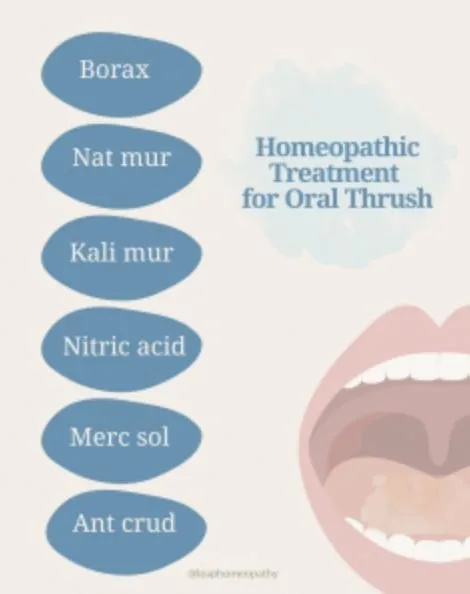
Homeopathic Help for Oral Thrush in Babies
Breastfeeding is a beautiful journey, but it doesn’t come without its challenges. One common issue many mothers face is oral thrush in babies - a yeast/ fungal overgrowth often triggered by an imbalance in the microbiome, antibiotic use, or moisture trapped in warm areas like the mouth or under the breast. Candida is usually present in the mouth and not harmful, but it can overgrow leading to symptoms. There may be swelling of the tongue and inside the cheeks.
In homeopathy, we see every baby and mother as unique, and there are several gentle, effective remedies that can support this healing process naturally.
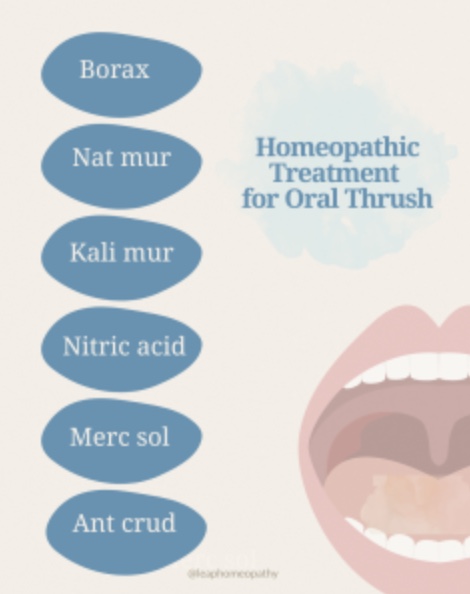
Here are six key homeopathic remedies to consider when supporting oral thrush in infants during breastfeeding:
Borax
This is one of the most common remedies for oral thrush. Symptoms may include white patches inside the cheeks and tongue, with raw sores making eating painful. The baby is often startled easily, and doesn’t like any downward motion and may dread nursing due to mouth sensitivity.
Natrum muriaticum
Babies needing Nat mur often have dry mucous membranes, cracked lips, or a mapped tongue. Thrush may recur frequently, and these babies may appear sensitive.
Kali muriaticum
This is a great remedy to think of whenever you see white discharges of any type. It is available as a cell/ tissue salt and can be helpful when the thrush is stubborn or severe. There can be greyish-white patches, foul breath, and irritability. Kali mur is useful when there is difficulty feeding, even though the baby is hungry.
Nitric Acid
Here we often see painful cracks or sores in the mouth or corners of the lips. Your baby may be irritable and hard to comfort – they may scream during feeds and have a sour smell to their breath or stools. There may be dryness of the mouth.
Merc sol
If there is a lot of drooling and foul smelling breath, Merc sol is a remedy to consider. There may be a moist white coating in the mouth. The drooling may be excessive, especially during sleep, and they can be restless at night. There may also be a low-grade fever or signs of teething alongside with spongy gums or much crying.
Antimonium crudum
Babies needing Ant crud may have a thick white coating on the tongue (like milk curd), are cranky when touched, and may reject the breast abruptly. They often appear uncomfortable after feeds and may have signs of digestive imbalance like bloating or colic.
👶🏽 Supporting Mom & Baby: Prevention & Care Tips
Breast hygiene: Wash and air-dry nipples after feeds. Consider rinsing with a mild diluted vinegar solution if thrush is persistent.
Probiotics: Both mom and baby may benefit from a gentle probiotic to help restore gut flora, especially if antibiotics were recently used.
Diet: Reduce sugar and refined carbs in mom’s diet, as yeast thrives on sugar. Include fermented foods where appropriate.
Sunlight & air: Let baby’s mouth and mom’s breasts get a little natural light and fresh air to discourage yeast growth.
Homeopathy offers a safe, non-invasive approach to support both mother and baby during this time. As always, remedies should be selected based on the totality of symptoms and with guidance from a qualified homeopath. This is not medical advice.
If you’d like to work with me to identify the best remedy for your baby’s needs - or to support your own health through the breastfeeding journey - feel free to reach out for a free discovery call.
Until next time, Leah
Follow the journey IG @leaphomeopathy


